

Hello folks! We hope you all had a wonderful Thanksgiving break and are ready for the final stretch of fall '08!
Monday's meeting will be our last chance to get together and organize before next semester! We will be planning our end-of-the-semester "shindig" for next week. Do we want to have a movie? Have a game night? Invite some faculty in? Build a cake in the shape of something historical? The world is our oyster! (within reason...) Brainstorm what fun things you would like to do at the event, and bring them to the meeting.
Next week will also be our elections for the spring, so if you are interested in running for an officer position, please let us know at the meeting on Monday! Being an officer is a great way to take a leadership position at the University.
Also, we would love some feedback from club members, history majors, history lovers who aren't in the club, et cetera, on what you loved and didn't love about this semester! Please use the comment section on this post to discuss what you would like to continue to do or what you would like to change! Are there any professors or movies that are musts for next semester? Non-club attendees, what would make the club more attractive to you? Your feedback is essential to making this club great for everyone! As always, feel free to bring up questions/comments/complaints/concerns at the meeting.
Happy December!! See you at the meeting!
Sunday, November 30, 2008

Sunday, November 23, 2008
Tomorrow's Meeting Cancelled
Since our anticipated faculty is unable to make our Monday meeting time and we're sure everyone has a lot of work to do before the break, we will not be meeting this week. Use the extra time to catch up on work or get ready to go home! We will meet again the Monday after break, December 1st.

Have a wonderful break, enjoy all the delicious Thanksgiving food, and be sure to spend some time reflecting on the things you are most thankful for!
Have a wonderful break, enjoy all the delicious Thanksgiving food, and be sure to spend some time reflecting on the things you are most thankful for!
Sunday, November 16, 2008
Exhibit: Legacy: W.E.B. Du Bois As Political Pioneer
The W.E.B. Du Bois Library is currently hosting an exhibit honoring the legacy of its namesake:

From the UMass events listing:
From the UMass events listing:
“Legacy: W.E.B. Du Bois as a Political Pioneer” includes materials relating to Du Bois’s efforts to change the political system for the better, from founding documents of the Niagara Movement and the Pan-African movement, to materials relating to his unsuccessful campaign for the U.S. Senate and his work for world peace.The exhibit is sure to be inspiring as well as fascinating for all of our future historians!
A pioneering sociologist, historian, novelist, playwright, and cultural critic, Du Bois committed his life to ending racial and social injustice. Without ever seeking a mass following, he was a peerless organizer who helped found both the Niagara Movement and the NAACP, and was a key Pan-African theorist. For many years, he was editor of The Crisis and other progressive journals, and an international spokesperson for peace and the rights of oppressed minorities. Through relentless struggle, Du Bois set the stage for the civil rights activists to follow.
Professor Chat: Robert Sullivan
We are pleased to welcome professor Robert Sullivan, associate professor of German and Scandinavian Studies, for our next professor chat! Professor Sullivan's main research focus is Medieval Literature, and he also offers a popular course on the Crusades and Islam.

Come meet professor Sullivan and hear his unique perspective on history and German studies. Professor chats are a great way to get to know the faculty in your department and make connections!
We hope to see you all on Monday!
Come meet professor Sullivan and hear his unique perspective on history and German studies. Professor chats are a great way to get to know the faculty in your department and make connections!
We hope to see you all on Monday!
Sunday, November 9, 2008
Career Development Series Finale: What can I do with my history degree?
The History Department and Career Services proudly present
What do history majors do after graduation? We’ve assembled a panel of alumni to talk about their careers. They’re here to tell you how they got started and to offer you advice on doing the same.
The panel below represents only a few options of the many fields open to history majors. The sky is the limit.
Panelists:
• Krista Ferrante, Project Manager, American Antiquarian Society
• Timothy Lyons, Special Education Teacher, 2006 Teach for America Corps Member
• Elizabeth Lasch-Quinn, Professor of History & Director of Graduate Studies, Maxwell School of Citizenship and Public Affairs, Syracuse University
• Deepak Kapoor, Program Recruiter, Massachusetts MENTOR
• Michael Cass, Supervisory Examiner, National Labor Relations Board
Moderators:
Caroline Gould, Assistant Director of Career Planning
Alice Nash, Undergraduate Program Director
Maria Abunnasr, Internship and Career Development Advisor
The program is sure to be insightful for history majors and non-majors alike! As always, refreshments will be served.
THE ANNUAL HISTORY ALUMNI CAREER NIGHT
Thursday, November 13, 2008
5:30 to 7:00 p.m.
Herter 601
Thursday, November 13, 2008
5:30 to 7:00 p.m.
Herter 601
What do history majors do after graduation? We’ve assembled a panel of alumni to talk about their careers. They’re here to tell you how they got started and to offer you advice on doing the same.
The panel below represents only a few options of the many fields open to history majors. The sky is the limit.
Panelists:
• Krista Ferrante, Project Manager, American Antiquarian Society
• Timothy Lyons, Special Education Teacher, 2006 Teach for America Corps Member
• Elizabeth Lasch-Quinn, Professor of History & Director of Graduate Studies, Maxwell School of Citizenship and Public Affairs, Syracuse University
• Deepak Kapoor, Program Recruiter, Massachusetts MENTOR
• Michael Cass, Supervisory Examiner, National Labor Relations Board
Moderators:
Caroline Gould, Assistant Director of Career Planning
Alice Nash, Undergraduate Program Director
Maria Abunnasr, Internship and Career Development Advisor
The program is sure to be insightful for history majors and non-majors alike! As always, refreshments will be served.
Thursday, November 6, 2008
Movie Night
Due to professor scheduling conflicts, this Monday we will have a movie night, not a professor chat. We are pleased to announce that the movie, by popular demand, will be Dr. Strangelove.

The classic Cold War satire is sure to be a hit with the club! Like previously, the movie will start at 6pm, not our regular meeting time. There will be pizza!!
Feel free to bring a friend! We hope to see you there.
The classic Cold War satire is sure to be a hit with the club! Like previously, the movie will start at 6pm, not our regular meeting time. There will be pizza!!
Feel free to bring a friend! We hope to see you there.
Sunday, November 2, 2008
Professor Anna Taylor's Bookshelf
From Professor Taylor:
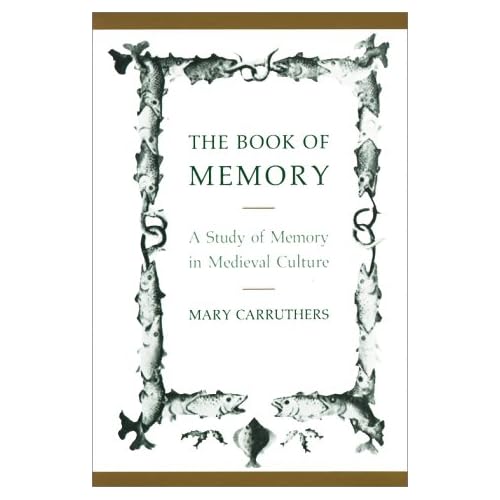 Carruthers, Mary J. The Book of Memory: A Study of Memory in Medieval Culture. Cambridge: Cambridge University Press, 1990.
This is a fascinating book about how medieval people thought about and used memory. Have you ever tried to remember things by creating an imaginary building (a memory palace) in your mind and filling its rooms with objects symbolic of the things you want to recall?
 Carruthers, Mary, and Jan M. Ziolkowski. Ed. The Medieval Craft of Memory: An anthology of texts and pictures. Philadelphia: University of Pennsylvania Press, 2002.
These are primary source documents relating to the same topic and – best of all – pictures of various mnemonic devices. A real insight into the workings of the medieval mind.
 Geary, Patrick J. Furta Sacra: Thefts of Relics in the Central Middle Ages. Princeton: Princeton University Press, 1978.
Charlemagne (d. 814) legislated that every church needed a relic of a saint in its altar. Further, powerful relics, believed to have healing power, drew pilgrims, donations and powerful patrons to a Church. Therefore, churchmen needed good relics (usually the bones of martyrs and other saints) and they engaged in trade and even theft to acquire them. But how do you know that you really have a saint’s bone and not just a piece of a cow? Churchmen told elaborate stories (called translationes) explaining how their particular church came to possess the bones of the saints. A highlight of this highly enjoyable and readable book is the story of monks forming raiding parties to steal relics from another monastery.
 Geary, Patrick J. Phantoms of Remembrance: Memory and Oblivion at the End of the First Millennium. Princeton: Princeton University Press, 1994.
In this series of essays, Geary explores how medieval individuals not only created new versions of their past to fit their present needs, but also how they deliberately forgot or obliterated evidence that contradicted their new stories. Geary’s work is great for challenging your perceptions about medieval Christianity. Here he shows us monks forging charters and describing dragons!
 Ginzberg, Carlo. The Cheese and the Worms: The Cosmos of a Sixteenth-Century Miller. Trans. John and Anne Tedeschi. Baltimore: John Hopkins, 1982.
This is a book about the early modern period, but still well worth reading as a medievalist, because it gives a much more nuanced picture of heresy and inquisition than the prevailing popular views. The Italian Miller, Menocchio, developed a cosmology in which the world springs from decay, like worms from cheese. Unsurprisingly, this view was deemed heretical by the Catholic Church. Ginzberg’s other books are also well worth your time (especially The Night Battles: Witchcraft and Agrarian Cults in the Sixteenth and Seventeenth Century. Trans. John and Anne Tedeschi. Baltimore: John Hopkins, 1985).
 Leclerq, Jean. The Love of Learning and the Desire for God: A Study of Monastic Culture. Translated by Catharine Misrahi. 2nd ed. New York: Fordham University Press, 1974.
This is the book that made one of my advisors become a medievalist and so is, indirectly, partly responsible for my own intellectual formation. Leclerq, a French historian and Benedictine monk, examines monastic education and reading and finds that medieval monks read both Christian and pagan texts with the aim of getting closer to God. Leclerq discusses medieval monastic reading as a meditative process that its practitioners described using metaphors of eating and digestion. This slow, thorough and ruminative approach is quite different to the kind of skim reading (or Googling) by which modern readers may acquaint themselves with information. Leclerq’s book is itself not at all susceptible to quick reading. Rather, reading this book is itself a meditative experience, requiring time and a quiet mind.
 Schmidt, Jean-Claude. The Holy Greyhound: Guinefort, Healer of Children since the Thirteenth Century. Cambridge: Cambridge University Press, 1983.
Since the thirteenth century, the Catholic Church claimed the exclusive right to canonize saints, but in reality it proved impossible to enforce who – or what – was revered in this manner by local communities. Catholic theology does not support the notion of a dog saint, but that didn’t hamper Guinefort’s popularity.
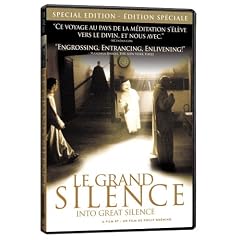 And a film: Into Great Silence (2006, Philip Gröning).
Like Leclerq’s book, this film is a meditative experience. The filmmaker received permission to live in the alpine Carthusian monastery of Grand Chartreuse, which has changed very little since its foundation in the late eleventh century. There is no plot and very little dialogue in this film – don’t watch it expecting to be entertained, but you may find yourself transported into a calm and contemplative space through vicarious experience of the monks’ life.
These are books on religious and cultural history. I am particularly interested in medieval cognition, with how people in the Middle Ages understood their world. These books unsettle popular notions of how medieval people behaved or challenge modern assumptions about human how humans order their minds and social interactions.
Carruthers, Mary J. The Book of Memory: A Study of Memory in Medieval Culture. Cambridge: Cambridge University Press, 1990.This is a fascinating book about how medieval people thought about and used memory. Have you ever tried to remember things by creating an imaginary building (a memory palace) in your mind and filling its rooms with objects symbolic of the things you want to recall?
Carruthers, Mary, and Jan M. Ziolkowski. Ed. The Medieval Craft of Memory: An anthology of texts and pictures. Philadelphia: University of Pennsylvania Press, 2002.These are primary source documents relating to the same topic and – best of all – pictures of various mnemonic devices. A real insight into the workings of the medieval mind.
Geary, Patrick J. Furta Sacra: Thefts of Relics in the Central Middle Ages. Princeton: Princeton University Press, 1978.Charlemagne (d. 814) legislated that every church needed a relic of a saint in its altar. Further, powerful relics, believed to have healing power, drew pilgrims, donations and powerful patrons to a Church. Therefore, churchmen needed good relics (usually the bones of martyrs and other saints) and they engaged in trade and even theft to acquire them. But how do you know that you really have a saint’s bone and not just a piece of a cow? Churchmen told elaborate stories (called translationes) explaining how their particular church came to possess the bones of the saints. A highlight of this highly enjoyable and readable book is the story of monks forming raiding parties to steal relics from another monastery.
Geary, Patrick J. Phantoms of Remembrance: Memory and Oblivion at the End of the First Millennium. Princeton: Princeton University Press, 1994.In this series of essays, Geary explores how medieval individuals not only created new versions of their past to fit their present needs, but also how they deliberately forgot or obliterated evidence that contradicted their new stories. Geary’s work is great for challenging your perceptions about medieval Christianity. Here he shows us monks forging charters and describing dragons!
Ginzberg, Carlo. The Cheese and the Worms: The Cosmos of a Sixteenth-Century Miller. Trans. John and Anne Tedeschi. Baltimore: John Hopkins, 1982.This is a book about the early modern period, but still well worth reading as a medievalist, because it gives a much more nuanced picture of heresy and inquisition than the prevailing popular views. The Italian Miller, Menocchio, developed a cosmology in which the world springs from decay, like worms from cheese. Unsurprisingly, this view was deemed heretical by the Catholic Church. Ginzberg’s other books are also well worth your time (especially The Night Battles: Witchcraft and Agrarian Cults in the Sixteenth and Seventeenth Century. Trans. John and Anne Tedeschi. Baltimore: John Hopkins, 1985).
This is the book that made one of my advisors become a medievalist and so is, indirectly, partly responsible for my own intellectual formation. Leclerq, a French historian and Benedictine monk, examines monastic education and reading and finds that medieval monks read both Christian and pagan texts with the aim of getting closer to God. Leclerq discusses medieval monastic reading as a meditative process that its practitioners described using metaphors of eating and digestion. This slow, thorough and ruminative approach is quite different to the kind of skim reading (or Googling) by which modern readers may acquaint themselves with information. Leclerq’s book is itself not at all susceptible to quick reading. Rather, reading this book is itself a meditative experience, requiring time and a quiet mind.
Schmidt, Jean-Claude. The Holy Greyhound: Guinefort, Healer of Children since the Thirteenth Century. Cambridge: Cambridge University Press, 1983.Since the thirteenth century, the Catholic Church claimed the exclusive right to canonize saints, but in reality it proved impossible to enforce who – or what – was revered in this manner by local communities. Catholic theology does not support the notion of a dog saint, but that didn’t hamper Guinefort’s popularity.
And a film: Into Great Silence (2006, Philip Gröning). Like Leclerq’s book, this film is a meditative experience. The filmmaker received permission to live in the alpine Carthusian monastery of Grand Chartreuse, which has changed very little since its foundation in the late eleventh century. There is no plot and very little dialogue in this film – don’t watch it expecting to be entertained, but you may find yourself transported into a calm and contemplative space through vicarious experience of the monks’ life.
Career Development Series: Law School & Careers in History
There will be three Career Development events in the next two weeks! They are:
Thursday, Nov 6 -- Career Development Double-Header
3:00 pm
APPLYING TO LAW SCHOOL
Diane Curtis, pre-law advisor, will talk to students about if Law School is for you, how to apply, and how to finance your degree.
4:00 pm
BECOMING A HISTORY TEACHER
Faculty from the School of Education will talk about their programs that can help you become certified as an elementary, middle, or high school teacher, including STEP (Secondary Teacher Education Program), and CTEP (Collaborative Teacher Education Program).
Thursday, Nov. 13
5:30 pm
ALUMNI CAREER NIGHT
This exciting event is the highlight of our career development program! Several former UMass history undergrads will return to campus to share their experiences working in publishing, teaching, social services, and historical and environmental outreach. Come and hear what real people have done with their UMass history degrees!
3:00 pm
APPLYING TO LAW SCHOOL
Diane Curtis, pre-law advisor, will talk to students about if Law School is for you, how to apply, and how to finance your degree.
4:00 pm
BECOMING A HISTORY TEACHER
Faculty from the School of Education will talk about their programs that can help you become certified as an elementary, middle, or high school teacher, including STEP (Secondary Teacher Education Program), and CTEP (Collaborative Teacher Education Program).
Thursday, Nov. 13
5:30 pm
ALUMNI CAREER NIGHT
This exciting event is the highlight of our career development program! Several former UMass history undergrads will return to campus to share their experiences working in publishing, teaching, social services, and historical and environmental outreach. Come and hear what real people have done with their UMass history degrees!
Subscribe to:
Posts (Atom)