

These are books on religious and cultural history. I am particularly interested in medieval cognition, with how people in the Middle Ages understood their world. These books unsettle popular notions of how medieval people behaved or challenge modern assumptions about human how humans order their minds and social interactions.
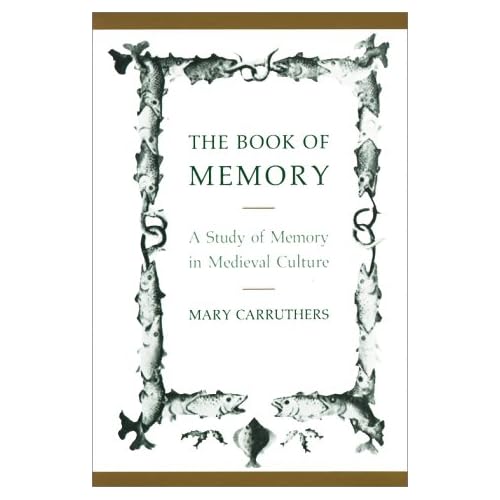 Carruthers, Mary J. The Book of Memory: A Study of Memory in Medieval Culture. Cambridge: Cambridge University Press, 1990.
This is a fascinating book about how medieval people thought about and used memory. Have you ever tried to remember things by creating an imaginary building (a memory palace) in your mind and filling its rooms with objects symbolic of the things you want to recall?
 Carruthers, Mary, and Jan M. Ziolkowski. Ed. The Medieval Craft of Memory: An anthology of texts and pictures. Philadelphia: University of Pennsylvania Press, 2002.
These are primary source documents relating to the same topic and – best of all – pictures of various mnemonic devices. A real insight into the workings of the medieval mind.
 Geary, Patrick J. Furta Sacra: Thefts of Relics in the Central Middle Ages. Princeton: Princeton University Press, 1978.
Charlemagne (d. 814) legislated that every church needed a relic of a saint in its altar. Further, powerful relics, believed to have healing power, drew pilgrims, donations and powerful patrons to a Church. Therefore, churchmen needed good relics (usually the bones of martyrs and other saints) and they engaged in trade and even theft to acquire them. But how do you know that you really have a saint’s bone and not just a piece of a cow? Churchmen told elaborate stories (called translationes) explaining how their particular church came to possess the bones of the saints. A highlight of this highly enjoyable and readable book is the story of monks forming raiding parties to steal relics from another monastery.
 Geary, Patrick J. Phantoms of Remembrance: Memory and Oblivion at the End of the First Millennium. Princeton: Princeton University Press, 1994.
In this series of essays, Geary explores how medieval individuals not only created new versions of their past to fit their present needs, but also how they deliberately forgot or obliterated evidence that contradicted their new stories. Geary’s work is great for challenging your perceptions about medieval Christianity. Here he shows us monks forging charters and describing dragons!
 Ginzberg, Carlo. The Cheese and the Worms: The Cosmos of a Sixteenth-Century Miller. Trans. John and Anne Tedeschi. Baltimore: John Hopkins, 1982.
This is a book about the early modern period, but still well worth reading as a medievalist, because it gives a much more nuanced picture of heresy and inquisition than the prevailing popular views. The Italian Miller, Menocchio, developed a cosmology in which the world springs from decay, like worms from cheese. Unsurprisingly, this view was deemed heretical by the Catholic Church. Ginzberg’s other books are also well worth your time (especially The Night Battles: Witchcraft and Agrarian Cults in the Sixteenth and Seventeenth Century. Trans. John and Anne Tedeschi. Baltimore: John Hopkins, 1985).
This is the book that made one of my advisors become a medievalist and so is, indirectly, partly responsible for my own intellectual formation. Leclerq, a French historian and Benedictine monk, examines monastic education and reading and finds that medieval monks read both Christian and pagan texts with the aim of getting closer to God. Leclerq discusses medieval monastic reading as a meditative process that its practitioners described using metaphors of eating and digestion. This slow, thorough and ruminative approach is quite different to the kind of skim reading (or Googling) by which modern readers may acquaint themselves with information. Leclerq’s book is itself not at all susceptible to quick reading. Rather, reading this book is itself a meditative experience, requiring time and a quiet mind.
 Schmidt, Jean-Claude. The Holy Greyhound: Guinefort, Healer of Children since the Thirteenth Century. Cambridge: Cambridge University Press, 1983.
Since the thirteenth century, the Catholic Church claimed the exclusive right to canonize saints, but in reality it proved impossible to enforce who – or what – was revered in this manner by local communities. Catholic theology does not support the notion of a dog saint, but that didn’t hamper Guinefort’s popularity.
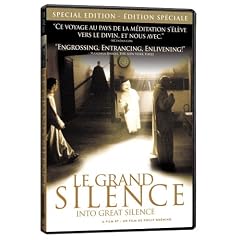 And a film: Into Great Silence (2006, Philip Gröning).
 Like Leclerq’s book, this film is a meditative experience. The filmmaker received permission to live in the alpine Carthusian monastery of Grand Chartreuse, which has changed very little since its foundation in the late eleventh century. There is no plot and very little dialogue in this film – don’t watch it expecting to be entertained, but you may find yourself transported into a calm and contemplative space through vicarious experience of the monks’ life.

No comments:
Post a Comment